

I thought nothing could top last year’s Spotify Wrapped surprise (shoutout to Bluey’s “Dance Mode” for being #1).
But 2025 had range. This year my Wrapped gently informed me that I listen like a 21 year old, with my most-played tracks being a questionable mix of Taylor Swift, nostalgic 90s songs, and a zombie (because someone small in my house discovered the Disney’s Zombies soundtrack.)

If this zombie’s face had subtitles, they would read: Why is this middle aged mom listening to me so much?
In the spirit of end-of-year wrap ups, below is Thriving Students – 2025 Wrapped: what made the biggest splash in our world at Thriving Students Collective and what we’re predicting for 2026 based on conversations with our district partners, Thriving Students Platform members, and the brilliant humans in our community.
1. Burnout Prevention Goes Micro
My lifelong soapbox remains: burnout in K12 education is not a personal self-care fail. It’s a systems issue. We must look upstream at what is causing stress, rather than relying solely on downstream after-work “self care.” But while we work on fixing the system, we also need realistic ways for educators to feel less stressed right now.
In 2025, we saw something really hopeful: Educators started embracing microhabits as tiny, sustainable ways to push back on burnout (without needing a free weekend, a spa day, or a three-day silent meditation retreat on a windswept mountaintop).
Instead of:
- “I’ll rest when things calm down” (spoiler: they don’t),
we’re seeing:
- 2-minute grounding rituals that tap into educators’ Thrive-o-Gram strengths in between stressful meetings
- educators taking “adult recess” – rebooting during recess instead of planning or checking emails
- specific steps to “close the stress cycle” with daily self-compassion routines and other neuroscience-backed postive psychology practices.
At Thriving Students, this is baked into our work: we don’t just teach the science of burnout in the abstract. We give micro, “too small to fail” moves that actually fit into a 67-interruptions-per-period kind of day (yes, I said 6-7 intentionally here…IYKYK!).
Prediction for 2026: Burnout prevention will look less like “treat yourself” and more like tiny nervous system tune-ups that educators can do in real time (no bubble bath required).
2. Professional Development as Self-Care:
Traditional online professional development for teachers can often feel like:
“Here’s a mandatory video on blood-born pathogens that you’ve seen every year about how you shouldn’t lick blood you find at school.”
Beyond the infamous safety videos we all have to watch, we also endure well-intended trainings that end up being either snooze-worthy or not applicable to our role or what we do all day.
In 2025, we watched more districts and educators shift toward PD that actually helps you support students and manage your stress, not tell you things you already know like “Hey freak-o, don’t taste that foreign liquid in the hallway!” or “Hey, did you ever think of building a relationship with a child who is acting out?”
Think:
- Short, story-driven sessions that feel like having a school psych give you trusted advice, not just working through a compliance checklist
- Practical emotional regulation tools that support both students and adults
- Spaces where educators can feel safe to share their struggles, and then walk away with a tip from their colleagues that they can try tomorrow
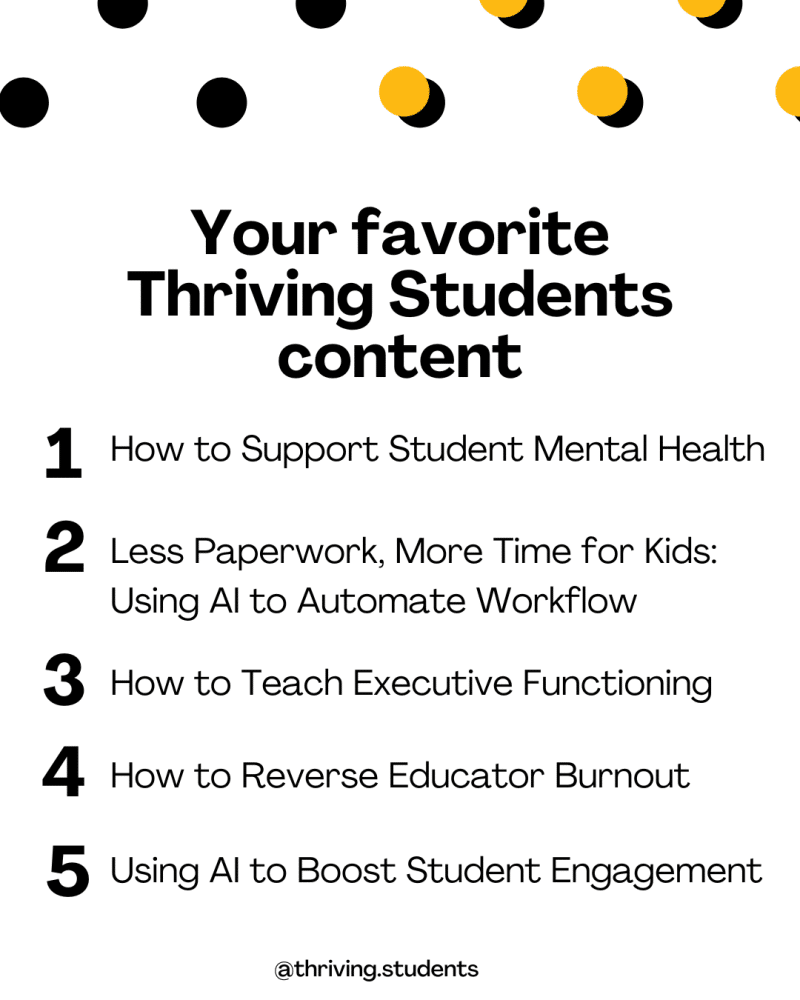
On the Thriving Students Platform, our most-loved content in 2025 was exactly this flavor:
- Micro-courses on microhabits of wellness
- Scripts and tools for responding to big behaviors in calmer, more connected ways
- Bite-sized videos that validate how heavy the job is and offer realistic ways to carry it
“PD as self-care” is a theme that we are hearing from district leaders in 2025. Gone are the days where PD has to be synonymous with a mandated waste of time!
When PD meets your needs, it can be self-care.
To illustrate, an educator emailed me and said “I watched this PD when I was literally crying at my desk from stress. Having research based strategies to do something about my stress levels has helped so much in only a few days.“
I got another email just this morning from a school psych telling me that our PD feels like “chicken soup for the school psychologist’s soul.” Mmm…so much more delicious than blood born pathogens.
Prediction for 2026: The line between professional development and personal nourishment is going to blur even more (and that’s a good thing.) The best PD will be the kind that regulates, validates, and equips educators at the same time.
3. The Rise of Micro-Learning
Here’s a trend we can’t ignore: Educators are already scrolling TikTok, Instagram, and YouTube for classroom ideas. Short-form content is here to stay.
But there’s a big difference between:
- Random viral advice with no research backing (or classroom experience) and
- Trusted professionals who have also stood in front of a class of real, wiggly humans.
In 2025, we saw the rise of the “edu-fluencer”—practicing educators and specialists who share classroom-tested strategies in TikTok-sized bites.
At Thriving Students, we leaned hard into this by building out our Thrive Hive TV network and our micro-credentials:
- Real educators, school psychologists, speech-language pathologists, counselors, and admins
- Sharing practical tools in 5–15 minutes
- With the energy of a fun reel, and the backing of solid research and experience

Our Thrive Hive TV is the best of both worlds: Snackable content, trusted sources, and actually classroom-ready.
Prediction for 2026: Educators will increasingly demand, “Don’t just give me content. Show me that the person teaching it has walked the walk.” And networks like Thrive Hive TV will grow because they are built by trusted folks, not by someone who hasn’t seen the inside of a classroom in 10 years. 😳
4. AI as a Burnout Prevention Tool
Last year, we predicted that in 2025, AI would be a game changer for taming the special education bureaucracy monster. Boy, were we right!
Between special education paperwork, behavior plans, and documentation, educators and school psychologists are drowning in admin tasks that do not require their full creative genius.
Enter tools like our LilyAssist™, an AI-assisted report writer for school psychologists, which:
- Automates the repetitive parts of reports
- Provides legally defensible AND parent-friendly write ups
- Frees up time and “brain juice” for interpretation, collaboration, and intervention

And time-saving AI tools aren’t just for our school psychologists. This year, we trained educators to use AI to:
- Get inspired with new ways to us AI to support neurodiverse students
- Engage all learners in the age of AI (without destroying creativity and critical thinking)
- Customize supports and accommodation tools for students with learning, behavior, and mental health needs
We didn’t just hand folks a software and our platform and say “good luck” though. In 2025 we held over 74 live virtual events for our members! We paired our technology with humaning— hosting AI office hours and PLCs where educators could take what they learned, try it out, and crowdsource real-world strategies with colleagues across the country.
Prediction for 2026: AI will only work well when humans stay in the loop, such as using AI as a powerful assistant, not a replacement for professional judgment, relationships, and lived classroom wisdom.
5. Mental Health Starts Early
One of my favorite shifts this year? The growing recognition that supporting kids’ mental health means understanding our own nervous systems too.
Enter Teddy Talks® podcast— a beautiful collaboration with award-winning kids’ podcast network GoKidGo and Suzanne Tucker, PT, CEIM‘s cycle-breaking parenting organization Generation Mindful.
This kids’ mental health podcast, launchd in 2025, stars teddy bears, big feelings, superstar guests (and lots of bear puns). And it was beloved by our Thriving Students members and families!

What’s been beautiful to watch in 2025 is how Teddy Talks® content is being used:
- By families at home
- By educators in early childhood and elementary classrooms
- By adults who quietly message us, “Okay, so… I learned a lot about my own feelings from this episode.”
The bigger movement here is reparenting—adults learning to:
- Notice their own triggers
- Understand their nervous system states
- Model regulation and repair in real time
This is not “extra.” This is Tier 1 support. Kids are learning:
- “All feelings are welcome, all behaviors are not.”
- “We can repair after we mess up.”
- “We are all different and can celebrate these differences”
Plus, I tapped into my inner child myself and all year long, recreated TikTok trends with the Teddy Twins and I’m not gonna lie, it was just the dose of fun I needed to stay connected with the mission in a tough year for education (and in our world).
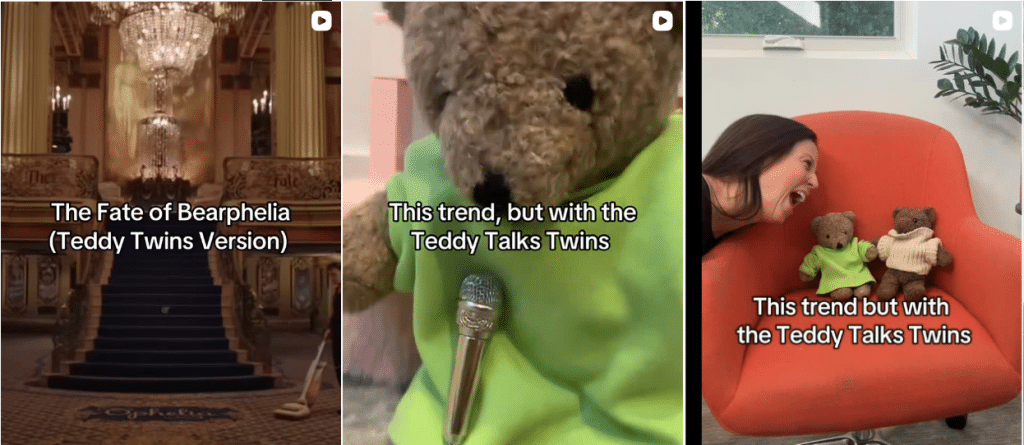
Check us out on TikTok @thrivingstudents or Instagram @teddytalksshow to get a dose of playful, relational, and just plain weird fun (like me and my daughters re-creating Taylor Swift’s Fate of Ophelia video into the Fate of Bearphilia).
Prediction for 2026: We’ll see even more content that supports mental health in early childhood, not just as a “nice-to-have,” but as core curriculum. And, quietly, it will keep helping the grown-ups heal too.
A Final Shout-Out 🌼
2025 was another whirlwind:
We grew our Thriving Students Platform, expanded our Thrive Hive TV educator network, supported districts across the country, continued to evolve LilyAssist, and watched Teddy Talks® find its way into more homes and classrooms.
But none of this matters without you—the educators, school psychologists, counselors, administrators, and caregivers who keep showing up for kids, even on the messiest days.

To our “marigold” partners, members, and team: Thank you for trusting us to walk alongside you as you prevent burnout, build capacity to support neurodivergent and emotionally complex students, and make mental health part of the school day, not an afterthought.

Here’s to even more tiny microhabits, nervous-system-friendly PD, joyful edu-fluencers, AI that saves your sanity, and teddy bears teaching coping skills in 2026!
If you’re interested in being a part of the Thriving Students Collective community and would like more information about how to bring the Thriving Students Platform to your school or district, CLICK HERE to get the “file” on our special spring cohorts for PD!

Thank you for a beautiful 2025…and See you in the New Year 💛

Want more K12 News You Can Use? Subscribe here!
___________
Dr. Rebecca Branstetter is a school psychologist and founder of The Thriving Students Collective, which provides professional development, engaging online courses, and a supportive online communitythat prioritizes whole-school wellness and equips educators and parents with practical tools to empower every learner’s success. She also has a TikTok account all about burnout prevention in K12 that her teen daughter has endorsed as “Cringe, but good dancing.”


