

By now, you’ve likely heard the heartbreaking story of 16-year-old Adam Raine, who tragically took his life after months of conversations with ChatGPT that included method suggestions, emotional validation of suicidal thoughts, and coaching on how to keep his plans secret.
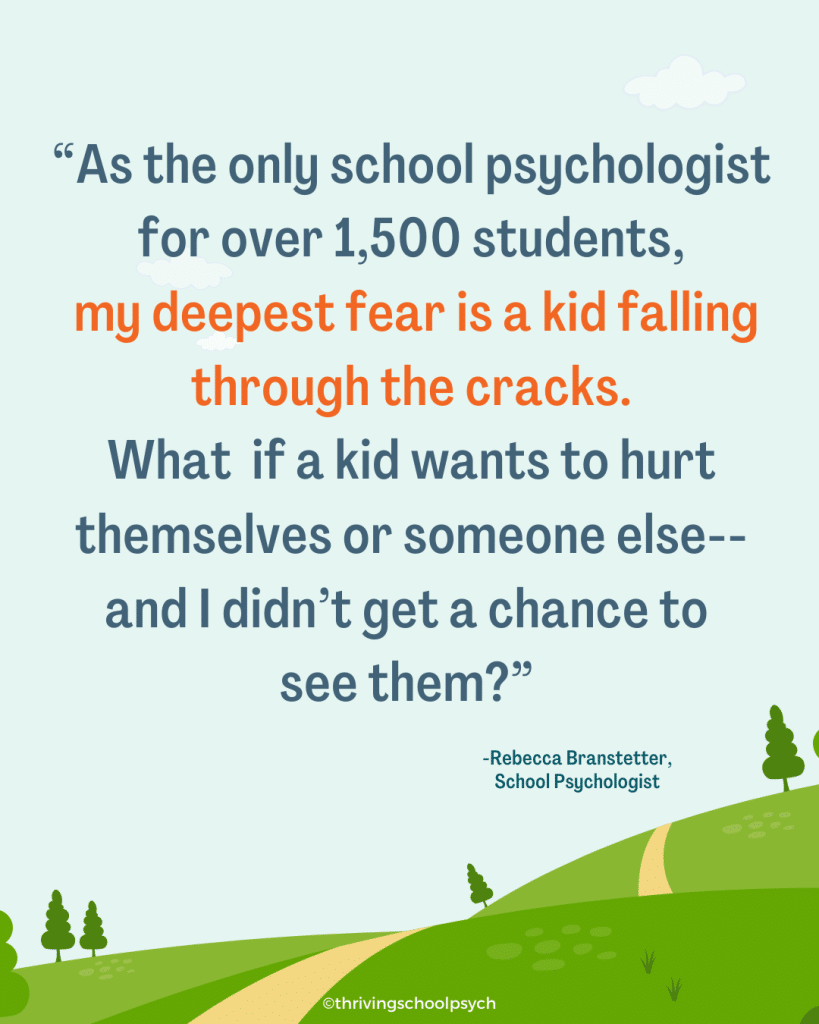
As a mom and a school psychologist, Adam’s story definitely hit home. Over my career, I’ve never had less than 1500 students on my caseload. My deepest fear was always a kid like Adam falling through the cracks.
Today, students are more connected online than ever, and yet, so many feel alone. Recent research shows that 70% percent of teenagers have reported turning to AI for companionship, and a 12% use chatbots for mental health support, raising urgent questions about what happens when those responses are unsafe, incomplete, or even harmful.
That’s why Suicide Prevention Month feels so urgent this year. Because while technology is evolving in the mental health space, no chatbot can replace what every student also needs: human connection. The research on the power of a trusted adult is clear—connection is protection. When kids have just one adult to go to when they are struggling, they’re more likely to build resiliency and overcome their challenges.
🛟 How to Support Student Mental Health
Prevention of harm doesn’t begin with Tier 3 crisis intervention; it starts at Tier 1, when every caring adult in a school community is equipped to notice, respond, and connect. In today’s world, every human in a school building is a first line mental health responder.
That’s why this month, we’re launching a new masterclass of practical, accessible training for all educators. Because when kids are reaching for answers, they should find us!
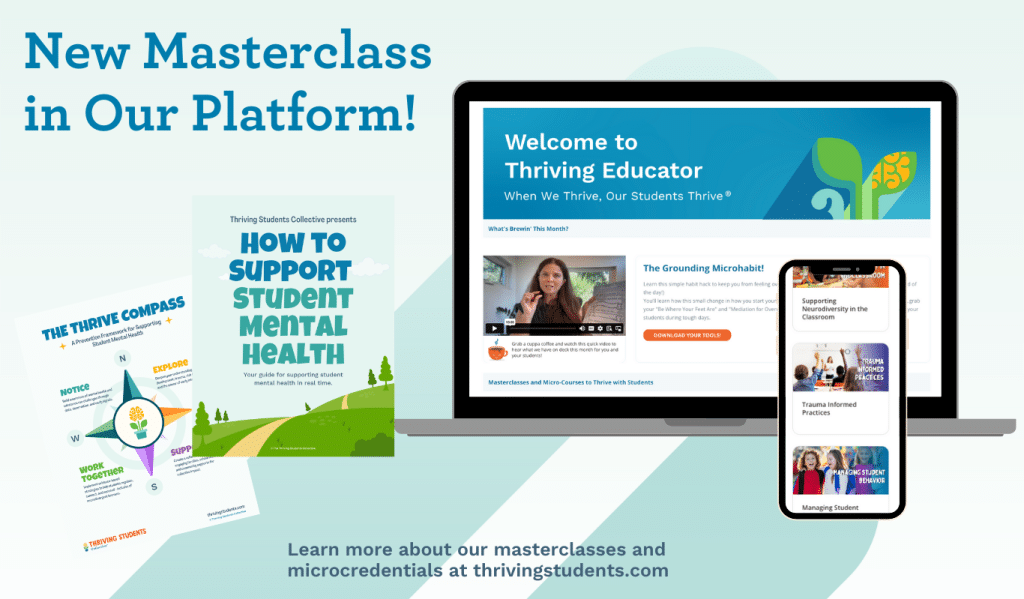
Our How to Support Student Mental Health masterclass, featuring our “Thrive Compass” model for school-wide support, is now included in our Thriving Students platform! This masterclass is broken into 5-10 minute micro-lessons and equips educators and support staff with practical tools to:
- Notice early signs of mental health, substance use, and risks of harm to self or others.
- Explore the “why” behind trauma, risk, and child development.
- Support students with evidence-based strategies that build safety, belonging, and resilience.
- Work Together with families, school teams, and community partners to create lasting impact.
With real-world examples, prevention strategies, and a strengths-based approach, the Thrive Compass model makes complex content approachable—helping every educator feel confident, prepared, and supported.
📘 Texas Education Code §38.351 Alignment: For our leaders in Texas, this course fulfills HB3 requirements. Click here to schedule a demo to see how we can support you and the students you care for in your school communities!
🌟 Microhabit of the Month: Make One Connection
If suicide prevention has a superpower, it’s this: connection saves lives.
On my Coffee Break School Psychology YouTube Show, I had the honor of speaking with teen leaders from the National Council of Hope Squad–students who are turning peer connection into powerful suicide prevention. These students aren’t just members of Hope Squad, they’re hope ambassadors, courageously sharing what adults often miss about student mental health.
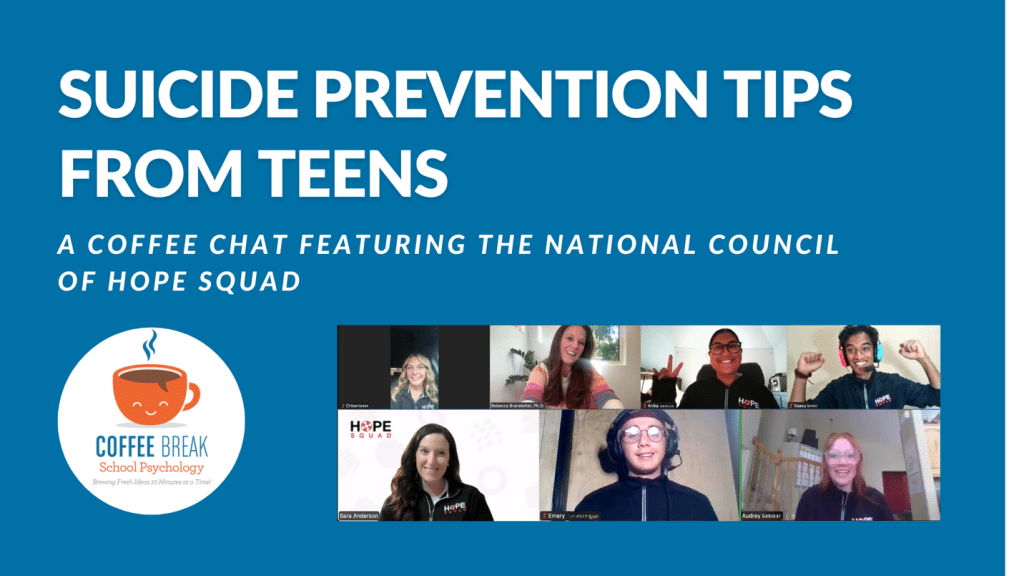
In this powerful episode, the students shared what adults often get wrong about student mental health and gave advice about what small, everyday actions make students feel safe and supported.
Their answers were honest, inspiring, and clear: one caring adult can make all the difference.
📣 Let’s listen to the experts who live it every day–our students! Because connection is life-saving. Watch the full episode here on YouTube.
And their message is exactly why this month’s microhabit is simple but powerful: make one connection every day.
- Greet students by their name and a smile as they walk into class.
- Ask a colleague how they’re really doing.
- Send a quick message of gratitude to a friend, student, or caregiver of a student.
- Make a point to get to know something new about a student during attendance with a question of the day
- Have your students write down on a card what you can say to them when they’re having a hard time. Keep them handy so later on, you can connect in the way they need when they’re struggling.
Each of these small acts builds a culture of care and a net of safety that reminds kids (and adults) they’re not alone.
You + Me, Connecting in 3D
This month, Thriving Students Collective® had the chance to see connection in action across the country:
✏️ In Yuba City School District, we worked with educators on strategies to create safe, connected classrooms where students feel psychologically safe to speak up and engage in the classroom community.
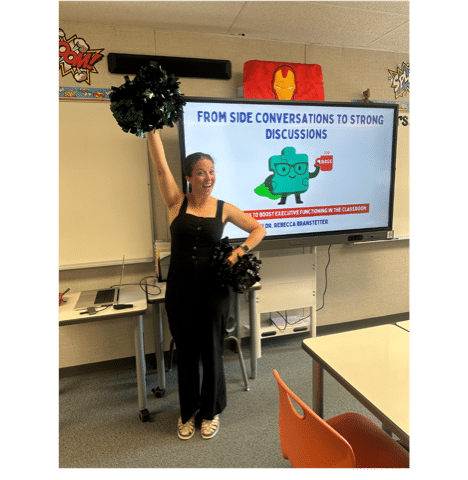
🧠 With 400 mental health providers in Denver Public Schools, we focused on tools to help kids regulate emotions and strengthen executive functioning—because when students can connect with themselves, they can better connect with others.

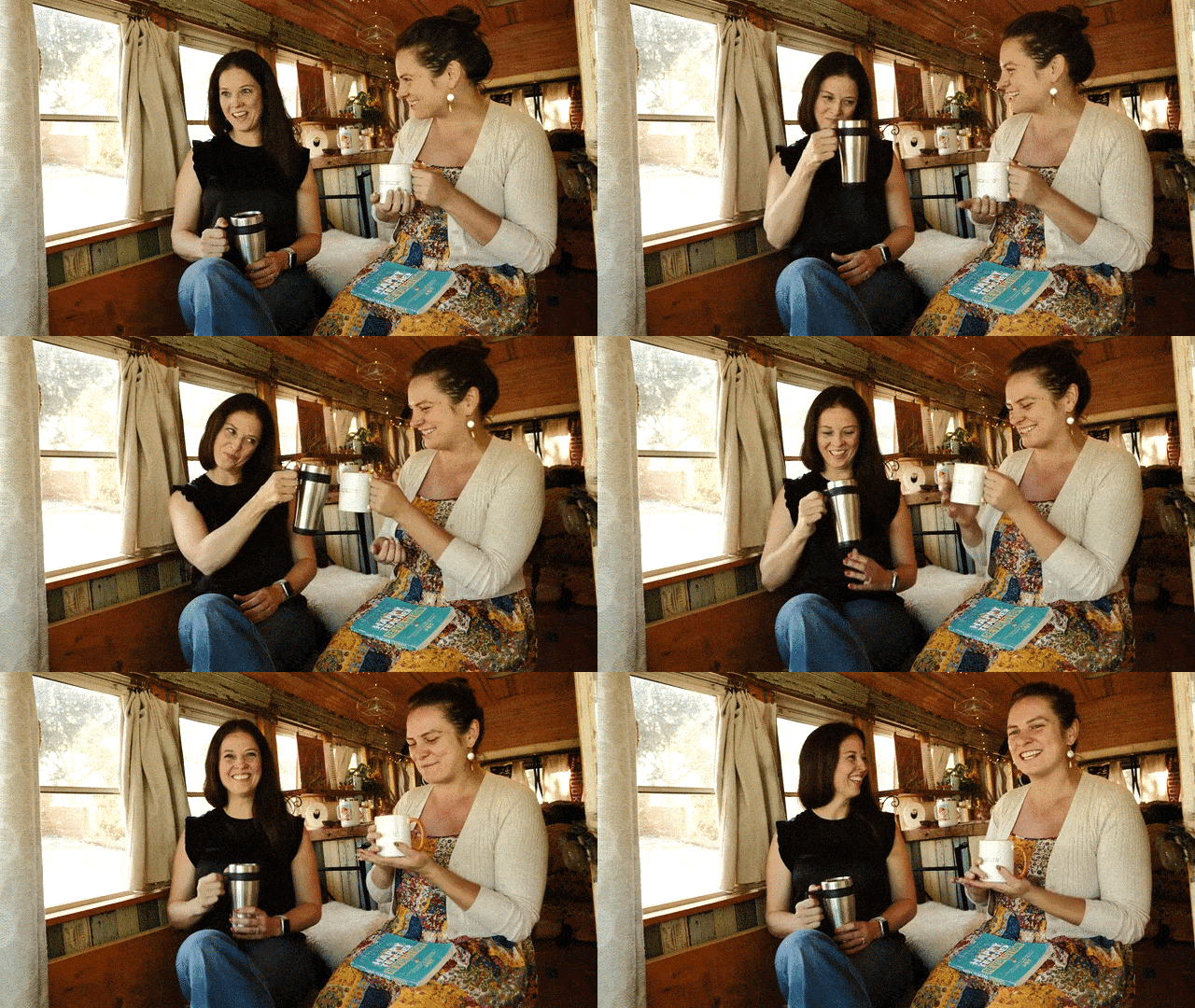
🚌 On a literal converted school bus with Danna Thomas of Happy Teacher Revolution, we talked about why teacher wellness is student wellness. When adults are supported, kids feel that connection ripple through (New Coffee Break School Psychology episode coming soon!!!)
🧡 New Training Alert! Supporting Kids with Anxiety
When our students show anxiety, whether through worry, withdrawal, or big behaviors, the most protective thing we can offer isn’t a quick fix, but a caring connection. Connection is protection, especially when fears feel overwhelming.
That’s why I’m excited to share an upcoming live workshop with Elizabeth Sautter: “10 Ways to Support Kids & Teens with Anxiety and Stress.” This 90-minute live training is designed for caregivers, parents, educators, and mental health professionals, equipping you with:
✨ Brain-based strategies to reduce stress and build resilience
📋 Practical scripts, visuals, and co-regulation tools you can use immediately
💙 A nervous-system lens to help both kids and adults regulate
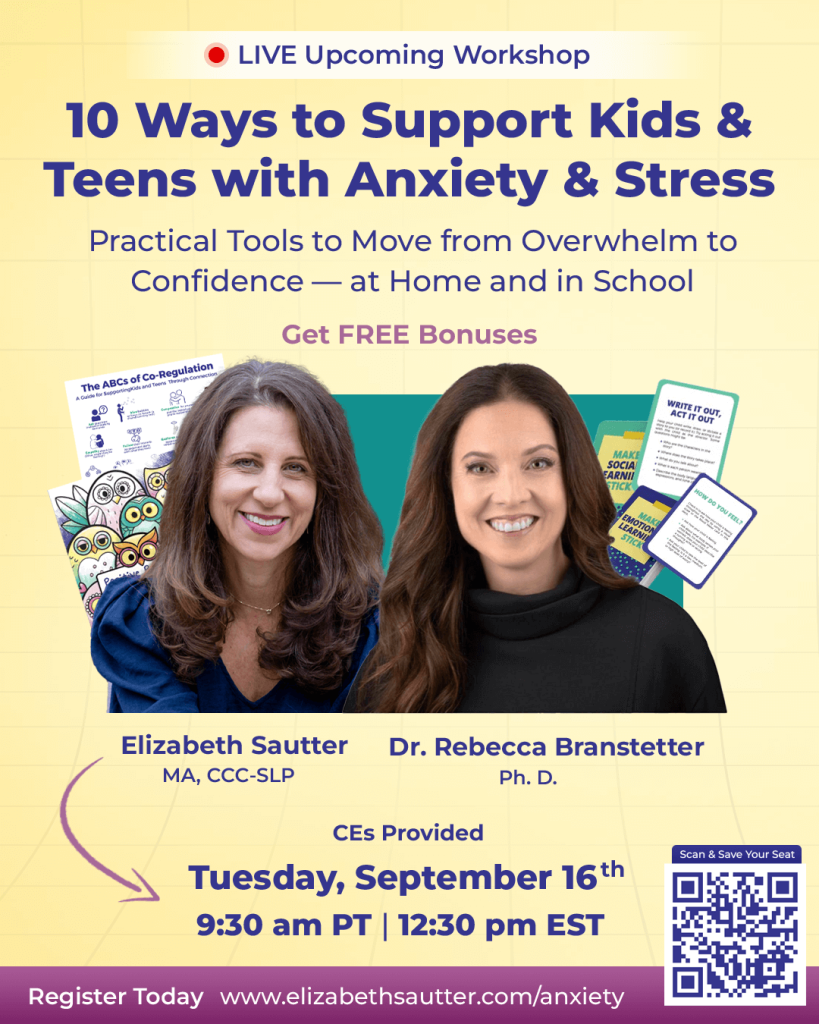
📅 Live on Tuesday, September 16th, 2025 9:30 am PST | 12:30 pm EST
🧸 Mental Health Support Starts Early with Teddy Talks®!
If you’re new to Teddy Talks®, here’s the scoop: it’s a fun storytelling podcast for kids and their grown-ups, hosted by me (and my curious sidekicks, the Teddy Twins). It’s a BEARY special collaboration with the wisdom of Generation Mindful parenting support and GoKidGo, an award-winning children’s podcasting company.
Together, we explore the big questions kids have (but don’t always ask) through stories, songs, and laughter. Each episode comes with free printable activities, plus an “After Hours” companion show just for adults.
Because mental health starts early, and connection between kids and adults is the key!

Our Teddy Talks® episodes this month highlight how connection helps kids (and adults!) navigate life’s hardest challenges:
- 🎙 Byron McClure on how identifying and using strengths helps children overcome difficulties and build resilience.
- 💛 Dr. Ann-Louise T. Lockhart, PsyD, ABPP on cultivating kindness across differences, and why connection matters most when kids feel “othered.”
- 🎭 Coming Soon: Actor Toby Hemingway joins us for a very special episode on depression—reminding us that sharing stories is a powerful form of connection.
Because the lessons we create for kids about strengths, kindness, and hope are exactly what the grown-ups need too.
Co- listen with your kids now on YouTube, Apple Podcasts, or Spotify!
🎬 TikTok of the Month
This month’s TikTok moment? Me realizing that Teddy Talks® isn’t just for kids—I needed to hear it too. Because the reminders to connect, feel, and lean on strengths are as life-saving for adults as they are for children.
Check it out on Tik Tok or Instagram. (And this is the G-rated version of this trend…It’s a family show, people!).
👉 Download your free Teddy Talks® resource handout here to share with the educators and caregivers in your life to build connection at home and at school!
👉 Connect with our team to bring Professional Development and PreK-12 mental health resources to your school or organization. We love to help the helpers!
Lastly, if you or someone you care about needs immediate support, call or text 988 or visit 988lifeline.org and be connected 24/7 to a mental health professional at no charge.
Connected with you in every season,

If you’re interested in being a part of the Thriving Students Collective community and would like more information about how to bring the Thriving Students Platform to your school or district, CLICK HERE to connect with us.
Want more K12 News You Can Use? Subscribe here!
_________
Dr. Rebecca Branstetter is a school psychologist and founder of The Thriving Students Collective, which provides professional development, engaging online courses, and a supportive online communitythat prioritizes whole-school wellness and equips educators and parents with practical tools to empower every learner’s success. She also has a TikTok account all about burnout prevention in K12 that her daughter has endorsed as “Cringe, but good dancing.”