


Okay. I need to confess something. For approximately ten years, I have stood at podiums, recorded trainings, written newsletters, and looked educators directly in the eye and said: You need to take real breaks. Fully unplug. Leave work at work. Your nervous system needs actual rest. And yet, every spring break, my laptop is packed alongside everything else…you know, just in case.
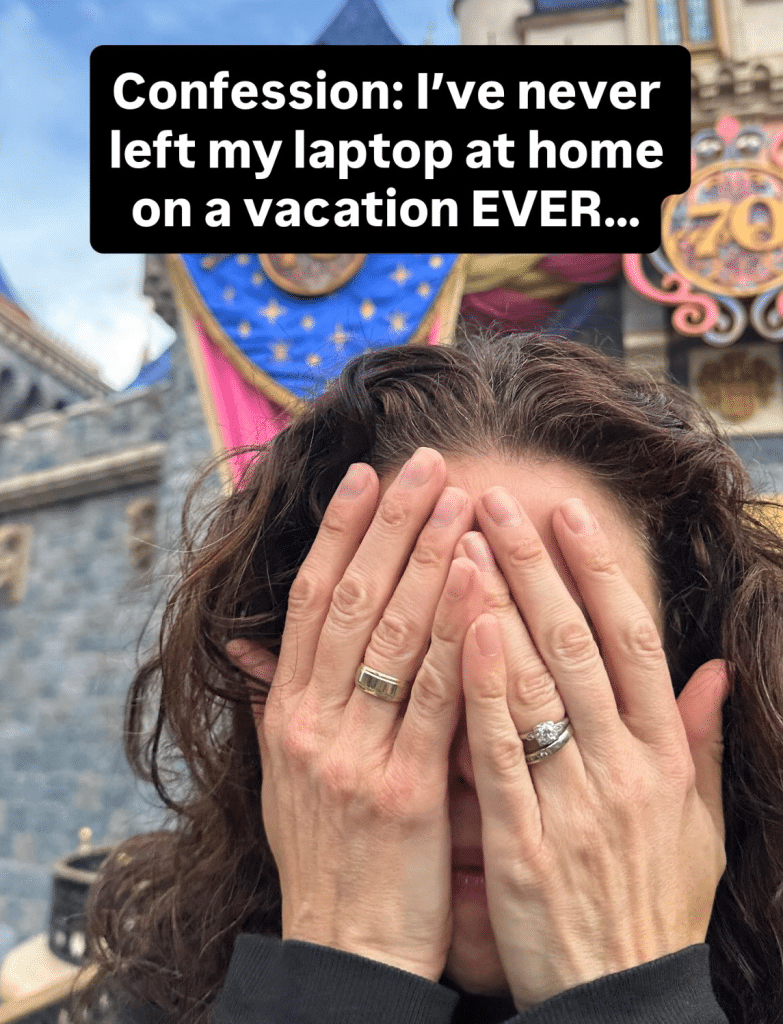
I literally had to google “How to set an out of office reply” in email because I’d never done it before.
This spring break, I finally left my laptop at home. Not gonna lie, there was a moment of separation anxiety so acute I felt like I was leaving a child behind. And then because I didn’t trust myself not to work,, I took Gmail off my phone, which introduced a whole second layer of weirdness, a low-grade hum of not knowing what I was missing.
Spoiler: I came back to a perfectly managed inbox. My colleagues had handled everything. I had missed a ton of spam, some newsletters I subscribe to, my team doing excellent work without me. The only opportunity a little gosh darn whimsy isI actually missed was being on the news to talk about AI literacy in youth. And they rescheduled.
This felt revelatory and also slightly humbling. I have been telling you to unplug for a decade and never actually took the plunge myself because of the fear. Turns out, I give pretty good advice after all…ha! I came home restored and ready to dive back in.
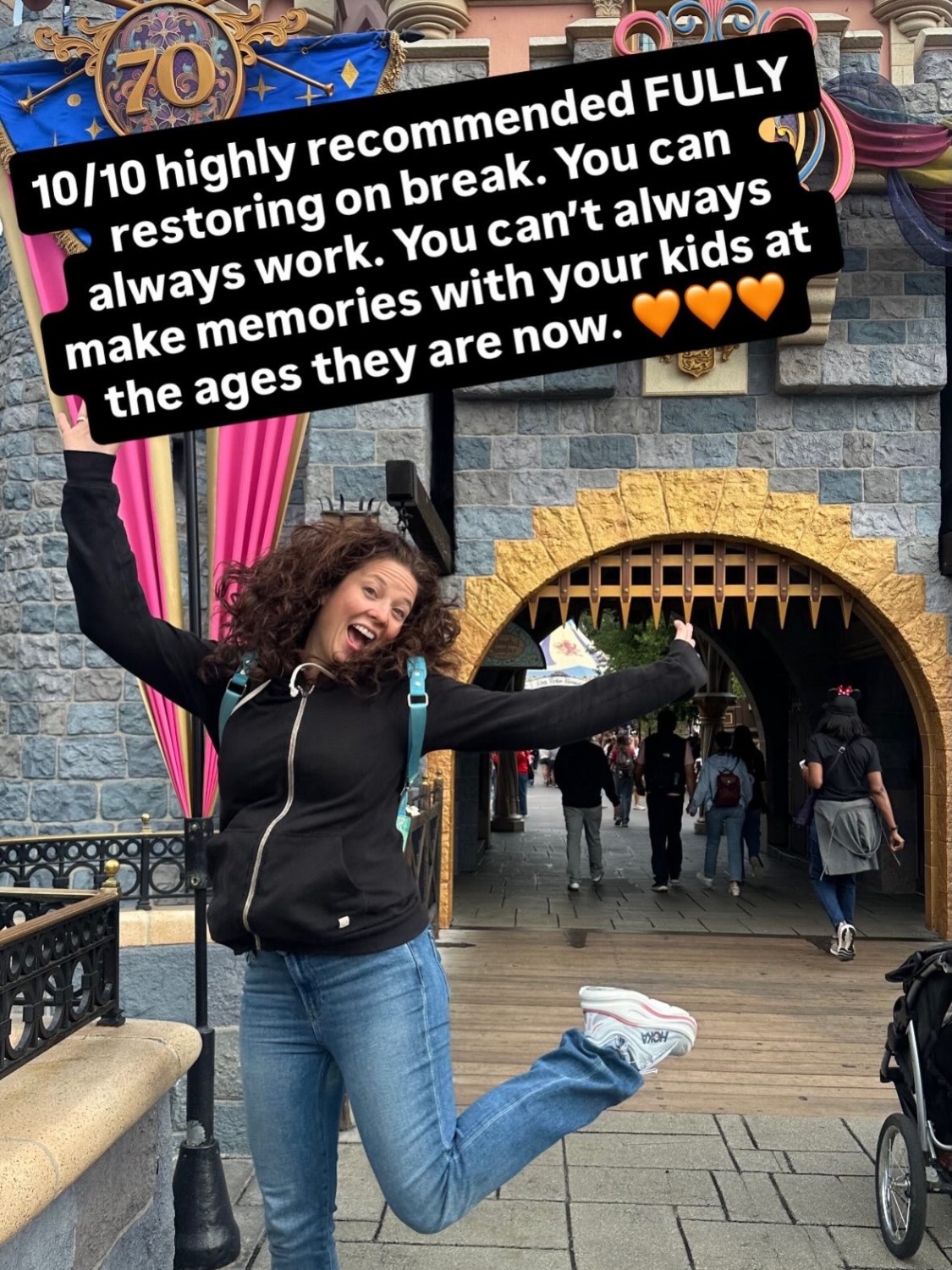
I’m sorry, but can we all agree that what we all need right now is some gosh darn whimsy???
🌱 Microhabit of the Month : The “Cold Spot”
Here’s the thing about taking Gmail off my phone: the weirdness wasn’t the missing emails. It was the not knowing. My brain kept generating little anxiety pings (phantom notification syndrome?) even though nothing was actually happening.
That feeling is data. It tells you how habituated your nervous system has become to being always-on. And it’s exactly why a real break has to be a cold spot, not a hot spot. Not “I’ll check once a day to keep the anxiety manageable.” An actual place and time where work cannot reach you–by design, on purpose, in advance.
Research by psychologist Sabine Sonnentag shows that psychological detachment from work during off-time — mentally leaving it, not just physically stopping — is one of the strongest predictors of reduced burnout and restored energy.
A “vacation” spent half-monitoring your
notifications is not actually a vacation.
It’s just work with a churro.
When your mind is elsewhere on vacay, you miss the restoration that rest is supposed to provide, and when your mind is on vacay at work, you miss the meaning that the work gives you. Neither one lands. In these moments, in invite you to tell yourself “Just be where your feet are.”
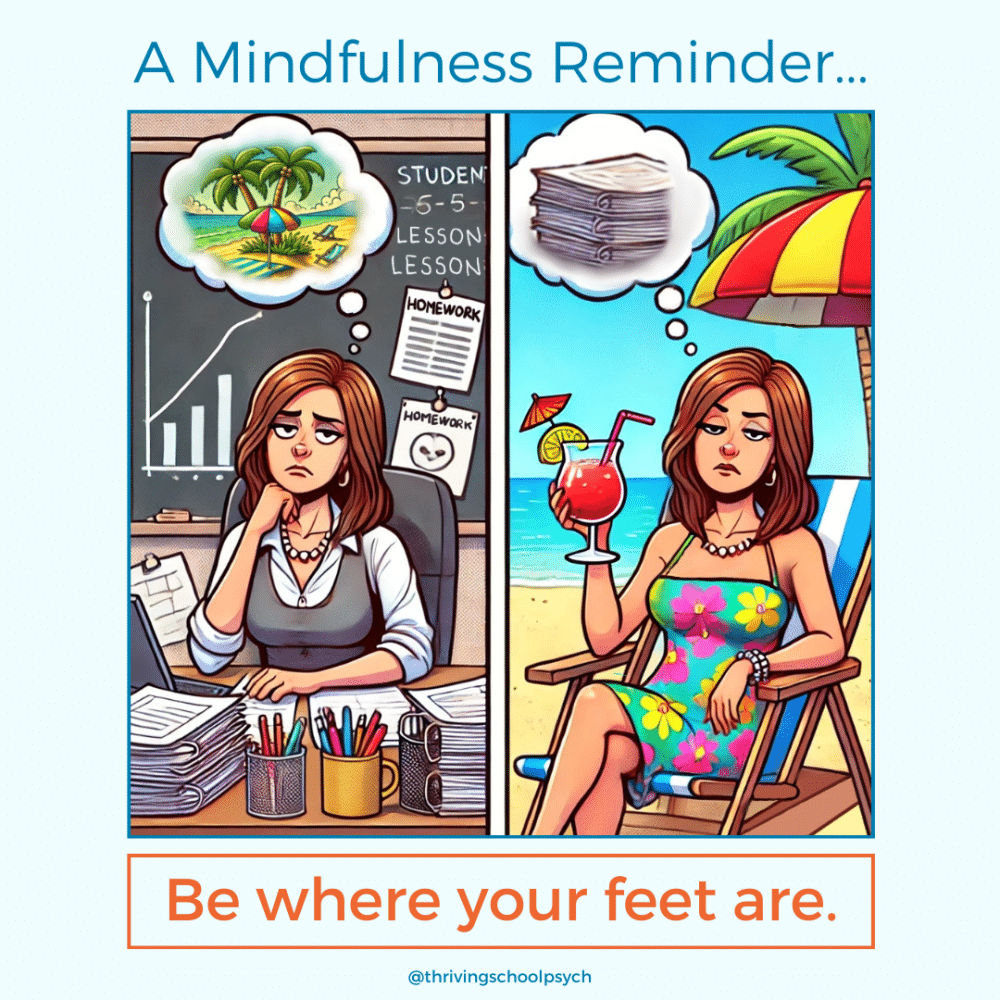
Slightly weird image of “me” created by ChatGPT
This month, pick one of the microhabits for a “cold spot” tech detox:
- Create one cold spot in your day or week — a time where work cannot reach you. It doesn’t have to be a theme park. It can be dinner. A walk. The first 30 minutes after you get home.
- Try taking one work app off your phone for a weekend and notice what the phantom-notification feeling tells you about your baseline.
- When your brain time-travels back to Monday, say: I’ll think about that then. Right now, I’m here. Then notice one specific thing you can see, hear, or smell.
- Trust that your colleagues are capable. The inbox will wait. The spam will accumulate. The important stuff will get handled (or it will still be there, and you’ll handle it better rested.)
You don’t have to go cold turkey and throw your phone and laptop in the ocean forever. Studies show that taking even short breaks could reverse measures of cognitive decline. A recent report indicates that a brief digital his detox may erase 10 years of social media brain damage and work as well as antidepressants. 😳
On Whimsy in a World Gone a Little Scary…
Speaking of Disneyland: we need to take a side quest to talk about Mr. Toad’s Wild Ride.
If you haven’t experienced this particular attraction, allow me to describe it: you get in a whimsical little car. Cheerful music plays. You crash through a library. You careen through the English countryside. You have a near-miss with an oncoming train. And then — and I need you to really receive this — you die and go to hell.
In Fantasyland. At a family theme park. For children.

Such a surreal weird ride…kinda like my life right now.
But Mr. Toad isn’t the only Disneyland ride that captures the particular emotional experience of working in schools and feeling the collective stress of living in an unpredictable world right now. Pirates of the Caribbean might do it even better.
You climb into a little boat. A cheerful sea shanty plays. Fireflies twinkle over a glowing bayou. Soft lantern light. You are charmed. You are relaxed. You might be humming along.
And then you plummet into the dark.
And then it’s jaunty again! Ships! Cannons! A catchy song! And then: darkness, chaos, things on fire. And then: jaunty. And then: plummet.
If you work in K–12 right now, you know this ride intimately. A great week with a student — jaunty! Then a budget cut — plummet. A beautiful IEP meeting — jaunty! Three referrals before 9am and a staffing shortage — darkness, things on fire.
The ride keeps moving. You don’t get to stop it. But you do get to decide whether you’re going to grip the bar in terror the whole way, or throw your hands up on the drops.
Whimsy isn’t denial. It’s the thing that makes the drops survivable. It says: yes, this is a lot, and also, can you believe this toad made it all the way to purgatory? Can you believe the pirate is still singing?
Hot Take: Educators need more whimsy right
now. The ability to find the funny, the absurd,
the genuinely delightful (even in the middle of a
wild and unpredictable ride) is not a distraction
from the hard work. It’s what makes the hard
work sustainable.
Here’s a teacher on TikTok who recently NAILED how to bring whimsy in the classroom by letting his kindergartners change their name for the day.
2.1 million people so far agree. Whimsy for the win.
See the whimsy and pure joy here on TikTok. It’ll remind you of why we do what we do and why we ride out the dark times together. 🧡
🤓 Let’s Put the FUN in Executive FUNctioning
Speaking of jaunty-with-occasional-plummeting: let’s talk about teaching executive functioning (all those planning, focus, and organization skills kids need). I will die on this hill: it can actually be joyful (yes, even when you’ve repeated your directions 247 times a kid raises his hand and asks, “what are we doing?”) 😵💫
When you have the right tools, EF instruction stops feeling like one more thing to do and starts feeling like a genuine highlight of the day, one of those rare moments where you watch a student who has been struggling with planning, flexibility, or emotional regulation just… do it. It’s the educator equivalent of a firefly bayou scene. Beautiful. A little magic. You want to tell everyone.
My recent Instagram reel captured exactly that energy — catch it over at @thrivingschoolpsych.
Two things to help you bring that energy into your school this April:
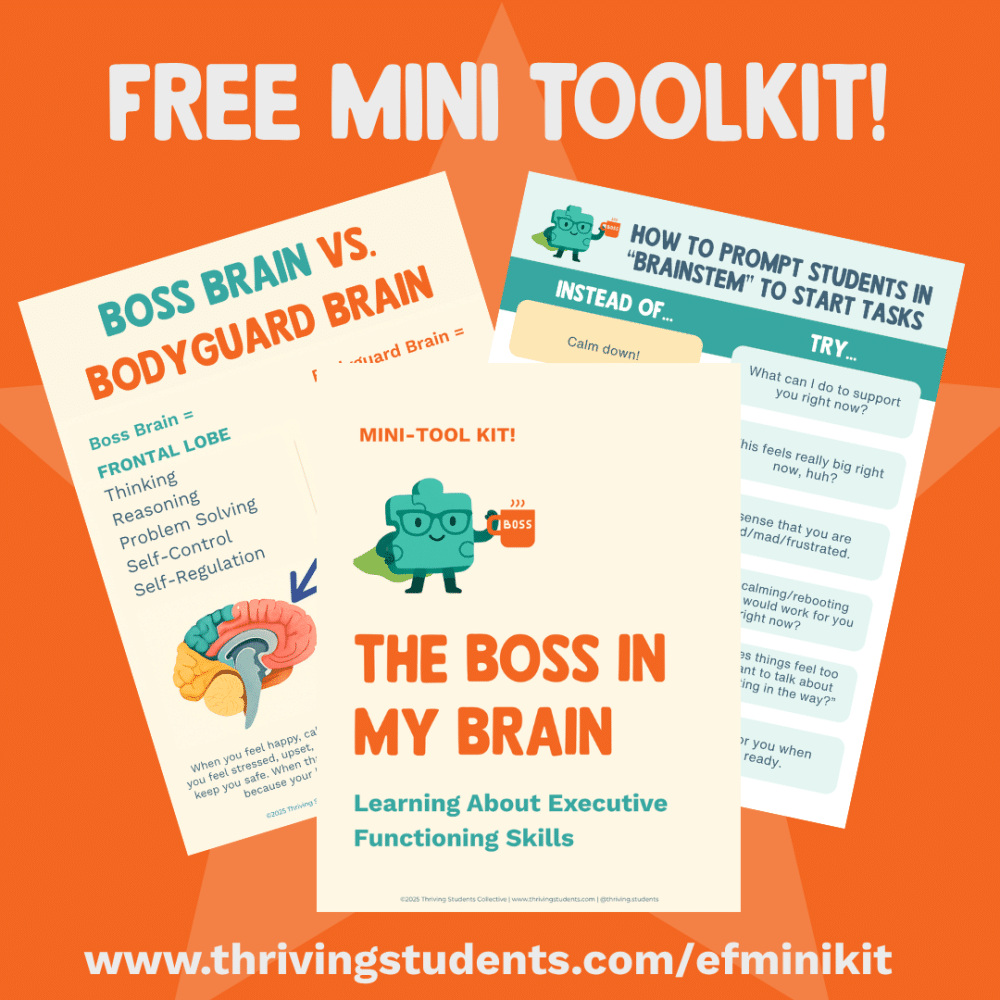
1) Free Mini EF Toolkit: practical, ready-to-use tools for teaching executive functioning skills to the students who need it most. Grab it, use it Monday. No plummeting required. www.thrivingstudents.com/efminikit
2) Live Workshop: How to Teach Executive Functioning:Join me live for a deep dive into practical, research-backed strategies for helping students build the EF skills that make school (and life) more manageable.

Here’s the deets:
🗓️ Sunday, April 19th, 2026 – 11am-1pm PST/ 2-4pm EST
💻 Register here (early bird rate through 4/15) www.thrivingstudents.com/ef
🤓 You’ll walk away with a full toolkit of “use it on Monday” tools for supporting your “frequent flyers” to the lost and found.
You + Me in 3D: Back to My Roots at UC Berkeley
Recapping March, what a joy it was to speak at my alma mater University of California, Berkeley at the School Psychology conference all about time management and AI hacks to free up school psychs spend more time with students and less time with laptops!
And can we talk about this majestic backdrop?!? What an honor to be in community in such a beautiful venue with such beautiful humans doing incredible work! 🧡
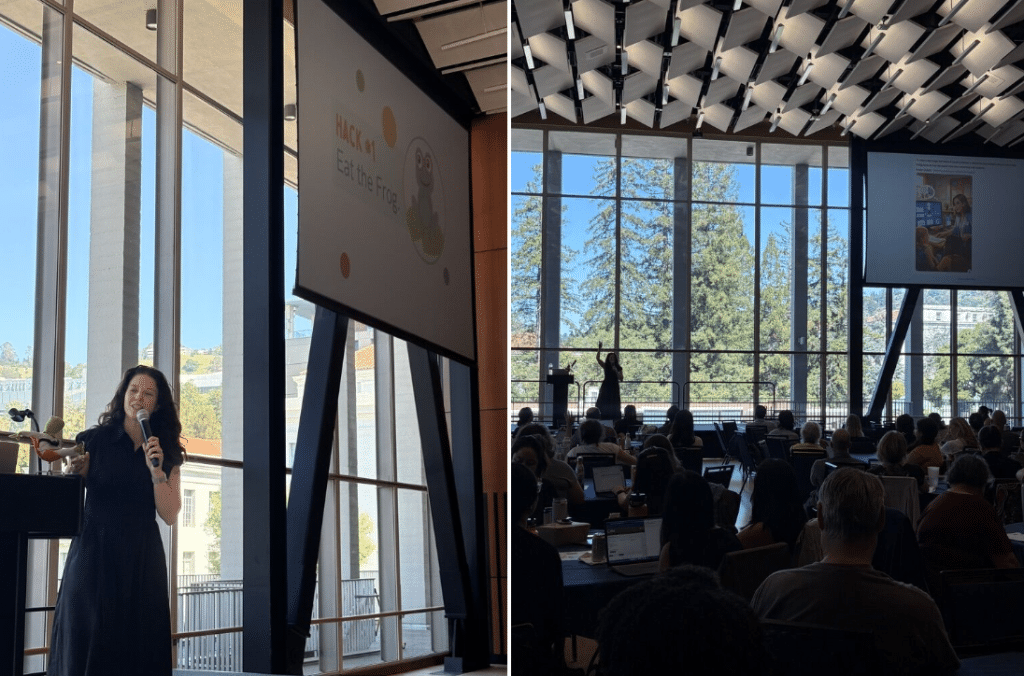
Full circle moment My first “speaking gig” was when I was a grad student and my advisor forced me to teach a lesson to a psych 101 class and I literally broke out in hives with anxiety and presented while looking like I had the measles.
TikTok of the Month: Unhinged Classroom Management Storie
I shared a story of the most bonkers thing I’ve seen a teacher do to get the classroom’s attention back…and the comments did not disappoint. There’s some whimsical educators out there. And you are my people. 🙂
Purely for catharsis, community, and the very necessary reminder that you are not alone in whatever just happened in your classroom, check out my story of whimsy on TikTok or Instagram.
I can’t believe what I witnessed…I think this teacher invented whimsy.
Final Thoughts…
Here’s what I want to leave you with this April:
The ride right now is a lot. It’s jaunty and then it plummets and then it’s jaunty again and you’re never quite sure which part is coming next. That’s real. That’s K–12 and the world in 2026.
But you don’t have to white-knuckle the whole thing. You’re allowed to leave the laptop at home sometimes. You’re allowed to take Gmail off your phone and sit with the weirdness of not knowing and discover that what you missed was mostly spam and your excellent colleagues handling things without you.
You’re allowed to be somewhere — really be somewhere — without one eye on the inbox.
Be where your feet are. Even if where your feet are happens to be a slightly unhinged boat careening through the dark while a pirate sings at you.
Especially then, actually.
See you in May — where I’ll be sharing all my best Mindful May tips for finishing the school year strong 🧡
With you on every jaunty (and plummeting) part of the ride,

If you’re interested in being a part of the Thriving Students Collective community and would like more information about how to bring the Thriving Students Platform to your school or district, CLICK HERE to connect with us.
Want more K12 News You Can Use? Subscribe here!
___________
Dr. Rebecca Branstetter is a school psychologist and founder of The Thriving Students Collective, which provides professional development, engaging online courses, and a supportive online communitythat prioritizes whole-school wellness and equips educators and parents with practical tools to empower every learner’s success. She also has a TikTok account all about burnout prevention in K12 that her teen daughter has endorsed as “Cringe, but good dancing.”


